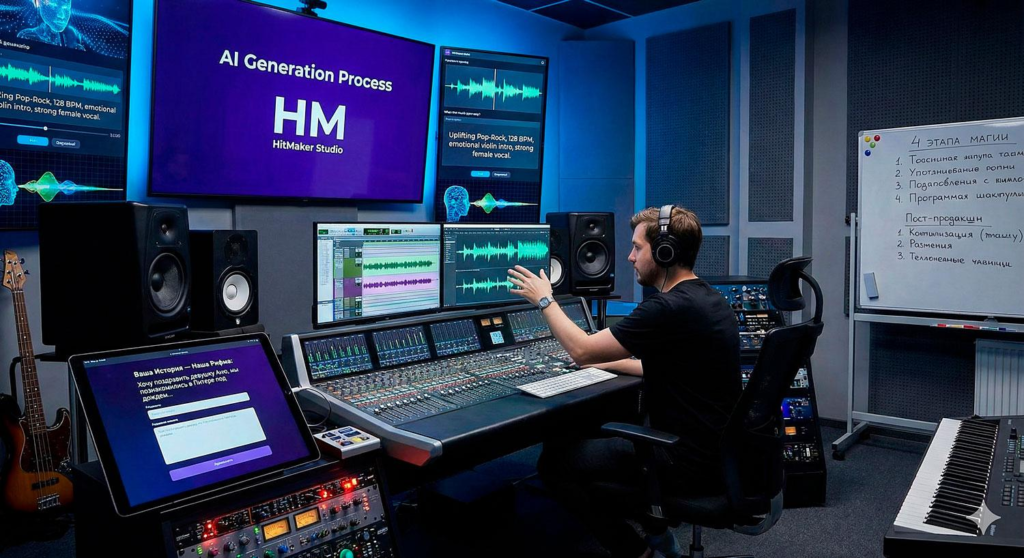
Creating music used to require expensive software, musical knowledge, instruments, recording equipment and often a lot of time.
In 2026, that process has changed dramatically.
With AI music generators, you can describe an idea in plain English and turn it into a song, instrumental track, soundtrack or background music within minutes. Some tools can generate vocals and lyrics, while others focus more on instrumental music, editing, soundtracks or creator-friendly licensing.
But with so many AI music tools available, choosing the right one can be confusing.
In this guide, we’ll look at some of the best AI music generators in 2026, what they are good at, their limitations, and which tool may be suitable for different types of creators.
Quick answer: If you want to create complete songs with vocals and lyrics, Suno is one of the easiest places to start. If you need customizable compositions or music for video and other creative projects, AIVA and SOUNDRAW are worth considering. Your best choice ultimately depends on the type of music you want to create and the license you need.
What Is an AI Music Generator?
An AI music generator is a software application that uses artificial intelligence to create music from instructions provided by the user.
Depending on the tool, you may be able to enter a simple prompt such as:
“Create an upbeat electronic pop song about traveling through India, with energetic vocals and a catchy chorus.”
The AI can then generate music based on characteristics such as:
- Genre
- Mood
- Tempo
- Instruments
- Vocal style
- Lyrics
- Song structure
- Musical influences
- Duration
Some platforms can also work from existing audio or MIDI material, giving creators more control over the final result.
This makes AI music tools useful not only for musicians but also for YouTubers, filmmakers, podcasters, content creators, advertisers, game developers and hobbyists.
Best AI Music Generators in 2026
Here are some of the most useful AI music platforms to consider.
1. Suno — Best for Creating Complete AI Songs
Best for: Full songs, vocals, lyrics and quick experimentation
Suno is one of the most well-known AI music creation platforms. It is designed to make the process of generating songs accessible even if you don’t have formal musical training.
You can provide a description of the song you want, and Suno can generate music around that idea.
Its current paid plans provide access to its latest models and features, including advanced editing, stem separation and the ability to work with your own voice. Suno’s current pricing page also states that its free plan does not include commercial use, while its Pro and Premier plans include commercial-use rights for new songs created under those plans.
Why Suno stands out
- Easy for beginners
- Generates complete songs
- Supports vocals and lyrics
- Useful for experimenting with different genres
- Includes editing features on paid plans
- Supports audio uploads
- Useful for content creators
Best for
If your goal is simply:
“I have an idea for a song and want AI to turn it into a complete track.”
Suno is one of the first tools worth trying.
Important licensing note
Don’t assume that every song generated with Suno can automatically be used commercially. The terms depend on your plan and circumstances. Suno’s current terms state that Pro and Premier subscribers receive rights to qualifying outputs generated during the paid subscription period, while free/Basic outputs are restricted to personal, non-commercial use. Suno also states that it cannot guarantee that copyright will vest in AI-generated output.
2. Udio — Best for AI Music Experimentation
Best for: Music experimentation, song creation and creative control
Udio has become another important name in AI-generated music.
The platform is designed around generating music from prompts and experimenting with different musical ideas.
You can use descriptive prompts to influence the genre, mood and overall direction of a track.
Why creators may like Udio
- AI-generated songs
- Prompt-based music creation
- Useful for experimentation
- Supports different musical styles
- Suitable for both beginners and experienced creators
Best for
Udio can be particularly interesting if you enjoy experimenting with different musical concepts instead of simply generating a one-off background track.
Things to consider
AI music platforms change quickly. Features, model capabilities, pricing and licensing conditions can change over time, so check the current terms before using generated music commercially.
3. AIVA — Best for Composers and Instrumental Music
Best for: Instrumental compositions, soundtracks and creators who want more control
AIVA takes a somewhat different approach from tools focused primarily on instant pop songs.
It describes itself as an AI music generation assistant capable of creating music in more than 250 styles. It also supports features such as editing generated tracks and using audio or MIDI influences.
AIVA can be especially useful for:
- Video creators
- Filmmakers
- Game developers
- Background music
- Instrumental compositions
- Creative projects
AIVA licensing
One of AIVA’s useful features is its clearly defined licensing structure.
Its current plans distinguish between non-commercial use, limited commercial licensing and full copyright. AIVA’s Pro plan states that users can own the copyright of qualifying compositions and monetize them without the restrictions applied to lower tiers.
Best for
Choose AIVA if you’re looking for AI-generated instrumental music and a more composition-oriented workflow rather than simply making a viral-style song.
4. SOUNDRAW — Best for Content Creators
Best for: YouTube videos, social media, podcasts and background music
SOUNDRAW is designed with creators in mind.
Instead of focusing exclusively on generating a complete vocal song, its appeal is the ability to create music that can work alongside other content.
That can make it useful for:
- YouTube videos
- Instagram videos
- Podcasts
- Presentations
- Short films
- Advertisements
- Background music
Why creators may prefer it
A content creator often doesn’t need a three-minute vocal song.
They may need:
“A 90-second energetic background track for a technology video.”
That’s where creator-focused AI music platforms can be useful.
Best for
If your primary goal is background music for videos and digital content, SOUNDRAW deserves consideration.
However, always check the current license terms for your specific use case. sound-raw’s license agreement contains restrictions around certain types of synchronization, distribution and other uses.
5. Stable Audio — Best for AI-Generated Audio Experiments
Best for: Instrumental music, sound design and creative audio experiments
Stable Audio is another name worth knowing in the AI audio space.
The platform is particularly interesting for people who want to experiment with generating music and audio from text descriptions.
For example, you might describe:
“Cinematic electronic background music with deep bass, atmospheric pads and dramatic percussion.”
The exact capabilities and available plans can change as the platform evolves, so check the current product and licensing information before using it for commercial projects.
AI Music Generator Comparison
| AI Music Tool | Best For | Vocals | Instrumental Music | Beginner Friendly |
|---|---|---|---|---|
| Suno | Complete songs | Yes | Yes | ⭐⭐⭐⭐⭐ |
| Udio | Song experimentation | Yes | Yes | ⭐⭐⭐⭐ |
| AIVA | Compositions & soundtracks | Limited/varies | Yes | ⭐⭐⭐⭐ |
| SOUNDRAW | Creator background music | Focus varies | Yes | ⭐⭐⭐⭐⭐ |
| Stable Audio | Music & audio experiments | Depends on workflow | Yes | ⭐⭐⭐⭐ |
Note: AI music platforms frequently update their models, features and plans. Always check the provider’s current terms before relying on a feature or license.
Which AI Music Generator Is Best for You?
There isn’t one AI music generator that is perfect for everyone.
Your choice should depend on what you want to create.
🎵 Want to create a complete song?
Try Suno or Udio.
These are particularly interesting if you’re looking for vocals, lyrics and a recognizable song structure.
🎬 Need background music for videos?
Consider SOUNDRAW or AIVA.
These tools can be more appropriate when music needs to support rather than dominate your video.
🎮 Creating a game or cinematic project?
AIVA can be worth exploring because of its composition-oriented workflow.
🧪 Want to experiment with AI-generated audio?
Try platforms such as Stable Audio, along with the other tools in this list.
How to Create a Song Using AI
One of the biggest advantages of AI music generators is how simple the process can be.
Here’s a basic workflow.
Step 1: Decide What You Want to Create
Before opening an AI music tool, decide what you’re trying to make.
For example:
- Pop song
- Rock song
- Background music
- Meditation music
- Cinematic soundtrack
- Podcast intro
- YouTube background music
- Electronic dance track
Having a clear objective makes prompting much easier.
Step 2: Write a Detailed Prompt
Instead of writing:
“Make a good song.”
Try something more descriptive:
Example:
“Create an uplifting electronic pop song about achieving your goals. Use energetic drums, atmospheric synths, a memorable chorus and a modern production style.”
You can specify:
- Genre
- Mood
- Tempo
- Instruments
- Vocal characteristics
- Song structure
- Topic
- Energy level
Step 3: Generate Multiple Versions
Don’t stop after the first generation.
AI music generators can produce noticeably different results from similar prompts.
Create several versions and compare:
- Intro
- Melody
- Chorus
- Vocals
- Instrumentation
- Overall energy
The second or third generation may be much better than the first.
Step 4: Edit the Best Version
Many modern AI music platforms offer editing capabilities.
Depending on the tool, you may be able to:
- Extend a song
- Change sections
- Modify vocals
- Separate stems
- Adjust the arrangement
- Upload audio
- Create alternative versions
This can turn AI music generation into an iterative creative process rather than a simple one-click operation.
How to Write Better AI Music Prompts
The quality of your prompt can have a significant effect on the result.
Instead of:
“Make a relaxing song.”
Try:
“Create a calm cinematic instrumental track with soft piano, warm strings, subtle ambient textures and a slow tempo. The mood should feel peaceful, emotional and suitable for a travel documentary.”
A useful prompt formula
Genre + Mood + Instruments + Tempo + Vocals + Theme + Use Case
For example:
Genre: cinematic electronic
Mood: inspirational
Instruments: piano, synths and strings
Tempo: medium
Vocals: emotional male vocal
Theme: overcoming challenges
Use case: motivational video
Then combine those details into one natural prompt.
Are AI Music Generators Free?
Many AI music platforms offer some form of free access or trial.
However, free does not necessarily mean commercially usable.
A free plan may have limitations involving:
- Number of generations
- Download options
- Audio quality
- Attribution
- Commercial rights
- Monthly credits
- Usage restrictions
For example, Suno’s current free plan explicitly states no commercial use, while its paid Pro and Premier plans provide commercial-use rights for new songs created under those plans.
AIVA similarly differentiates between free non-commercial use, limited commercial licensing and full copyright depending on the plan.
So don’t choose a tool based solely on whether it has a free plan.
Can You Monetize AI-Generated Music?
Sometimes, but it depends on the tool, plan, output and applicable laws.
This is one of the most important things to understand before uploading AI-generated music to YouTube, Spotify, social media or other commercial platforms.
There are two separate questions:
1. Does the AI platform give you commercial-use rights?
Your subscription and the platform’s terms may determine whether you can commercially use the generated track.
2. Does copyright automatically exist in the generated music?
That’s a separate legal question.
A platform giving you permission to commercially use an output does not necessarily mean that the output automatically receives copyright protection in every jurisdiction.
For example, Suno’s terms explicitly say that it does not guarantee copyright will vest in generated output.
Therefore, creators should not treat “commercial use allowed” and “copyright guaranteed” as the same thing.
What About Copyright and AI Music in 2026?
Copyright remains one of the most complicated areas of generative AI.
AI music companies and music rights holders continue to negotiate and litigate over issues including training data, licensing and the rights associated with generated music.
This is an evolving area rather than a settled question.
In 2026, Suno has also entered licensing arrangements with music companies while continuing to face legal challenges related to AI training and copyrighted music.
For creators, the practical lesson is simple:
Read the current terms before publishing music commercially.
Also avoid uploading copyrighted songs, vocals or recordings to an AI service unless you have the necessary rights to use them.
Suno’s terms, for example, require users to have the necessary rights and permissions for material they submit to the service.
Tips for Using AI Music Responsibly
AI music tools are powerful, but responsible use is important.
Don’t imitate a living artist too closely
Instead of asking for:
“Make a song exactly like [artist].”
Describe the musical characteristics you want:
“Modern atmospheric pop with emotional vocals, electronic percussion and a cinematic chorus.”
This gives you a more original creative direction.
Don’t upload copyrighted material without permission
If you’re uploading:
- Vocals
- Samples
- Instrumentals
- Recordings
- Songs
make sure you have the rights necessary to use them.
Check the license before monetizing
Always check the current terms of the specific platform and subscription you’re using.
Keep records of your creative process
For professional projects, consider saving:
- Your prompts
- Original lyrics
- Source recordings
- Project files
- AI platform subscription details
- License information
- Final edited versions
This can be useful if you later need to explain how a track was created.
Advantages of AI Music Generators
AI music tools offer several significant advantages.
Faster music creation
A concept that previously required hours or days of work can sometimes become a usable draft within minutes.
Lower barrier to entry
You don’t need to be a trained musician to experiment with musical ideas.
Rapid experimentation
You can test different:
- Genres
- Tempos
- Instruments
- Arrangements
- Moods
quickly.
Useful for content creators
YouTubers, podcasters and social media creators can use AI music tools to explore background music and original audio ideas.
Great for brainstorming
Even professional musicians can use AI as a source of ideas rather than treating it as a replacement for human creativity.
Limitations of AI Music Generators
AI music isn’t perfect.
Results can be inconsistent
One generation may sound excellent while another may contain unwanted artifacts or awkward transitions.
Vocals can still have imperfections
AI-generated vocals may occasionally contain unusual pronunciation, phrasing or tonal inconsistencies.
Less creative control than traditional production
A professional music producer can control virtually every element of a recording.
AI tools simplify that process, but they don’t always provide the same level of control.
Licensing can be complicated
Commercial-use rights vary between platforms and plans.
Copyright questions remain
The legal status of AI-generated content continues to evolve.
AI Music vs Traditional Music Production
AI music generators aren’t necessarily replacing traditional music production.
Instead, they provide another tool in the creative toolbox.
A traditional producer might spend hours creating a basic arrangement.
With AI, a creator can generate several ideas quickly and then use traditional software to refine one of them.
This hybrid approach can be particularly powerful:
AI generation → Human editing → Mixing → Mastering → Final production
The human creator remains responsible for deciding what works and how the final piece should sound.
Frequently Asked Questions
What is the best AI music generator in 2026?
There isn’t one universal winner. Suno is particularly strong for quickly creating complete songs, while AIVA can be useful for composition and soundtrack-oriented workflows. SOUNDRAW is worth considering for creators looking for background music.
Can I create a complete song with AI?
Yes. Some AI music platforms can generate songs containing vocals, lyrics, instrumentation and song structure from a text description.
Can AI generate instrumental music?
Yes. Many AI music generators can create instrumental tracks suitable for videos, podcasts, games and other projects.
Can I use AI-generated music on YouTube?
Potentially, but you need to check the specific platform’s licensing terms and your subscription. Commercial-use permission varies between services and plans.
Is AI-generated music copyright-free?
Not necessarily. “AI-generated” does not automatically mean “copyright-free.” Commercial licensing and copyright protection are separate issues.
Can AI music generators replace musicians?
AI can automate parts of music creation, but human musicians and producers still provide creativity, artistic direction, performance, editing and professional production.
Can I make music without knowing music theory?
Yes. Many AI music generators are specifically designed to let users describe their desired music using ordinary language.
Final Verdict: Which AI Music Generator Should You Choose?
AI music generation has moved far beyond a simple technology experiment.
In 2026, creators can generate songs, instrumentals, soundtracks and audio ideas in minutes.
If you want quick complete songs with vocals, start by exploring Suno or Udio.
If you want composition-oriented instrumental music, AIVA is worth considering.
If you’re primarily a YouTube or social media creator looking for background music, a creator-focused platform such as SOUNDRAW may fit your workflow better.
The most important thing, however, is not simply choosing the tool with the most impressive demo.
Look at:
Quality + Control + Ease of Use + Price + Licensing
And if you’re planning to monetize the music, always verify the current commercial-use and copyright terms before publishing.
AI can make music creation dramatically faster, but the best results still come from combining AI generation with human creativity, editing and judgment.
If you enjoyed this article, you may also like:
- 5 AI Gateways That Offer Free Tokens in 2026
- How to Build a Humanoid Robot in 2026: Costs, Timeline & Complete Blueprint
- Best AI Research Tools in 2026: ChatGPT, Claude, Gemini & Perplexity
- Best AI Resume Builders in 2026 — Free
- ChatGPT Review — Is It Worth Paying For in 2026?
- 10 Best Free AI Tools You Should Use in 2026
- Best AI Video Generators in 2026 — Free and Paid
- Best AI for Students in 2026: Top 10 Tools for Learning
- How AI Learns From Humans to Build Physical Robots
- How AI Learns From Humans to Build Physical Robots
- Why LangGraph Is So Popular in Enterprises — Pros, Cons & Real-World Use Cases in 2026
- ChatGPT vs Gemini vs Claude vs Grok 2026
- DeepSeek V4 vs Grok 4 vs Claude Opus 5 vs Nvidia Nemotron vs Gemini 2.5 Pro — The Ultimate AI Model Comparison for 2026
- AI Agent and LLM Frameworks Comparison 2026: LangChain vs LangGraph vs CrewAI vs AutoGen vs LlamaIndex vs Semantic Kernel
- Best Multi-Agent AI Platforms in 2026: CrewAI vs AutoGen vs LangGraph vs OpenAI Agents SDK vs Agno vs Semantic Kernel
- Best AI Development Platforms in 2026: OpenAI API vs Anthropic API vs Google AI Studio vs Vertex AI vs Azure AI Foundry vs AWS Bedrock vs Hugging Face
- Exploring the Latest AI Tools and Technologies
- How to Use ChatGPT for Business — A Complete Beginner Guide
- How to Write Blog Posts with AI — A Proven Step-by-Step Guide
- Best AI Coding Assistants 2026
- Ultimate Guide to the 10 Best AI Chatbots in 2026
- Claude AI Review — Best ChatGPT Alternative in 2026
- Jasper AI Review — Is It Worth $49/Month in 2026?
- How to Use AI for Social Media Marketing — Complete Guide
- AI Tools for Small Business Owners — Save 10 Hours/Week
- AI Tools for Content Creators
- Best AI Music Generators in 2026 — Create Songs in Minutes
- AI Design Tools Compared: Canva AI vs Adobe Firefly vs Midjourney
- Best AI Writing Tools 2026
- 10 Free AI Tools You Should Try in 2026
- Best AI Image Generators in 2026 — Free and Paid Compared
- Best AI Productivity Tools in 2026 — Work Smarter, Not Harder
- ChatGPT vs Claude in 2026 — Which AI Is Actually Better?
Visit Aidacoit.com for more AI comparisons, practical AI tutorials, enterprise AI insights, and emerging technology trends.
Pingback: 10 Best AI Chatbots in 2026: Your Complete Guide to Options
Pingback: Why LangGraph Is So Popular in Enterprises
Pingback: Best AI Development Platforms in 2026 - Aidacoit
Pingback: Best Multi-Agent AI Platforms in 2026 - Aidacoit